

Spring Rookery Watch: A Month-by-Month Guide to Nesting Season
Follow a British rookery from February stick-gathering to June fledging, with month-by-month tips on what to watch, how to count nests and how to avoid disturbing the birds.
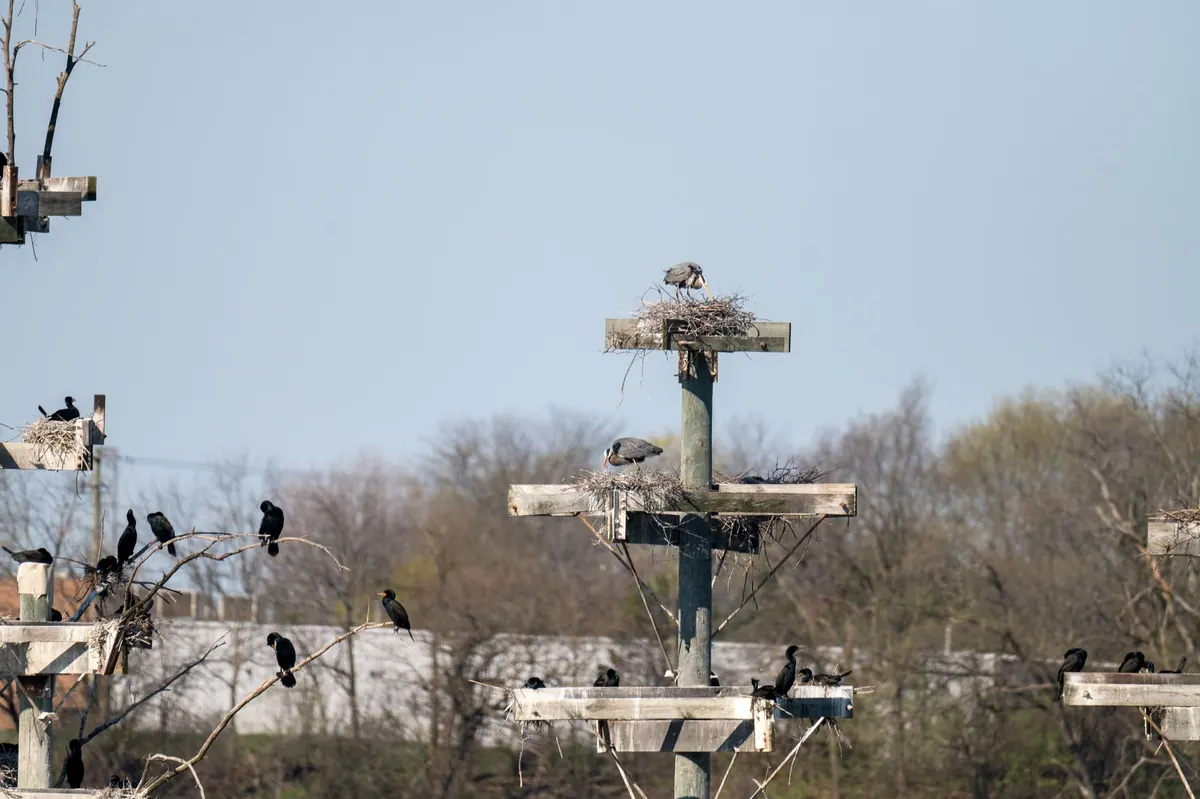
By the time most garden birds are singing for territory, rooks are already carrying sticks. In a British rookery the breeding year begins while the trees are still bare and ends with gawky young birds trailing their parents across the fields, which makes these noisy colonies one of the best places to follow bird behaviour through spring. You can watch a single nest develop from a bundle of twigs to a fledgling without going further than the edge of town. What follows is a month-by-month account of what the birds are doing, and what to look for when you visit.
Why Rookeries Come Alive Early
Rooks nest in colonies, usually in the crowns of tall trees: ash, sycamore, beech, Scots pine, and quite often in churchyards, parkland and suburban streets. Nests are repaired and reused year after year, which is why a rookery can be older than the houses around it. Building starts long before the leaves open, and that timing suits the birds, since chicks fledging in late spring have weeks of mild weather and soft ground in which to learn to feed themselves.
For the watcher, bare branches are a gift. Nest counting is easiest in February, when the shape and number of nests is far clearer than it will be in May.
February: Sticks, Squabbles and Repairs
Watch for the first birds prospecting the rookery in the second half of the month. Pairs bow to one another, fan their tails and droop their wings, and a bird that has found a good stick may be chased by three others. Stick theft is constant, so half the drama of an early rookery is watching one nest grow while another quietly shrinks. Look for birds snapping dead twigs from the tops of branches and flying back with pieces that look far too big to land safely. In mild springs, a few pairs will already be sitting by the end of February.
March: The Noisy Peak
This is the loudest, busiest month. The male brings most of the material; the female shapes it into a deep cup lined with grass, moss, wool and hair. Finished nests look bulky and untidy, wedged into a fork with a deep hollow in the middle. Clutches are usually three to five eggs, blue-green and blotched with brown and grey. Incubation starts with the first egg, so chicks in the same nest hatch at different times and grow at different rates.
Rooks tolerate people better than most crows, which makes them easy to watch from a path, a car park or a bus stop. Even so, don't stand directly beneath a nest tree.
April: Incubation and the First Chicks
Changeovers are the thing to watch now. One adult sits, the other feeds nearby on pasture, playing fields and verges, then returns and the pair swap places with a shuffle and a few quiet calls. Eggs hatch after a little over two weeks. Newly hatched chicks are pink, blind and helpless, and for the first days the female broods them while the male brings food for both. Wet, cold spells in April are hard on early broods, because the insects and worms the adults need are harder to find. You will often see birds flying with food in the bill and heading straight for a nest.
May: Feeding Time and Family Life
By May the rookery is a nursery and a battlefield. Chicks grow quickly and beg constantly, so you can hear a nest before you can see into it. Both adults make feeding trips from dawn onwards, and those return flights are the best clue to which nests are still active.
Rooks also mob predators together. Carrion crows, magpies and gulls that come near the colony will be harried out of the trees. Colonial nesting is partly a defence: more pairs means more eyes, and a nest raider is unlikely to get an easy run at any single nest.
June: Fledging and Young Rooks
Fledging usually begins in late May and continues through June. Young rooks leave the nest clumsily, often fluttering down to a lower branch or the ground, where they flap their wings and shriek to be fed. Adults keep feeding them for several weeks afterwards.
This is the best time to practise ageing. Adult rooks have a bare, grey-white face patch at the base of the bill, while young birds have fully feathered faces and look far more like carrion crows. Juveniles also show a short tail and a loose, fluffy look about the head and neck.
July and After: The Rookery Falls Quiet
By July most nests are empty and the colony goes silent. Family parties drift out into fields and join larger flocks, and adults moult and look scruffy for a few weeks. Rooks gather again in late summer and autumn to roost, and some pairs visit the old nests through the winter.
A rookery is worth a visit in every month, but the bones of the season are laid down now. Note which trees held nests, how many were occupied, and when the first young bird appeared. Read those notes next February and the differences will jump out at you.
Watching Well: Fieldcraft, Records and the Law
A few habits will make your spring visits more productive and kinder to the birds.
- Pick a vantage point on a public footpath or from the edge of a road and stay 30 metres or so back. Binoculars or a scope do the work, not your feet.
- Visit early morning for building and feeding trips, or late afternoon when birds return to the colony.
- Watch one tree at a time. Following three or four nests closely teaches you more than scanning a hundred.
- Count nests in February and March, before the leaves hide them, and write the number down.
- Move away if sitting birds become restless. Flushing a bird off eggs in cold, wet weather costs the clutch real heat.
- Keep a simple notebook: date, weather, first signs of nest building, first chick heard, first fledgling seen.
- Avoid drones and recorded calls near a rookery. Both disturb birds unnecessarily and rarely produce good observations.
Rooks, their nests and their eggs are protected by law in the UK, and it is an offence to take, damage or destroy an active nest. If you plan anything beyond quiet observation, check the current rules and take advice from the relevant statutory conservation body first.
Then put the date in your diary for next February, and start again.
Photo: Mahesh Mohan / Pexels